香取神宮,佐原は千葉県香取市にある大きな神社とその近くにある,昔の街並みを残した地区です。今回は,この歴史ある神宮と街を訪ねる旅を紹介します。 Katori Shrine and the nearby district of Sawara, which preserves old townscapes, are located in Katori City, Chiba Prefecture. This time, we took a journey to visit this historic shrine and town.
1.道のり-The journey
電車- by train
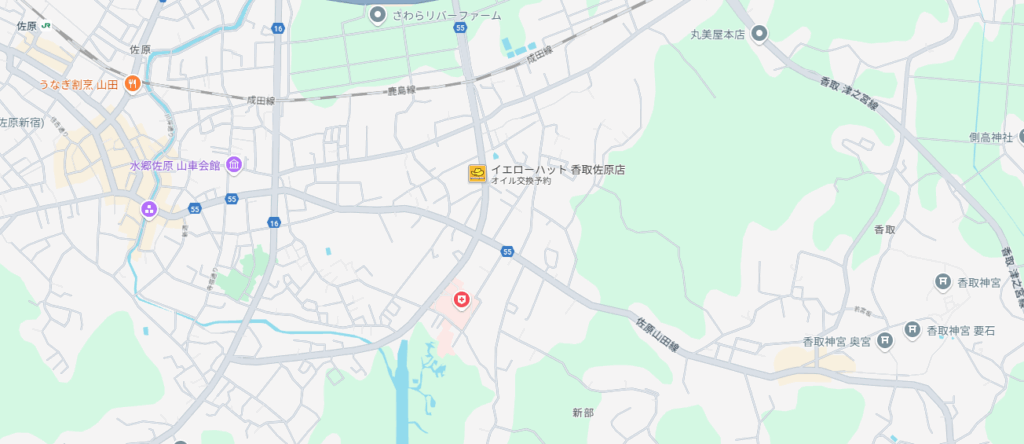
電車で行くなら,最初の目的地はJR佐原駅ということになります。距離的には香取神宮から最も近い駅はJR香取駅ということになりますが,残念ながらそこから香取神宮までもそれなりに距離があり,公共交通機関はないうえに,徒歩では30分程度かかります。したがって,バスやタクシーの出ているJR佐原駅からアプローチしていくことになります。 If you’re traveling by train, your first stop will be JR Sawara Station. Although JR Katori Station is the closest station to Katori Shrine, it’s still quite a distance from the station to the shrine itself. There is no public transportation, and the walk takes about 30 minutes. Therefore, you’ll need to start your journey from JR Sawara Station, where buses and taxis are available.
東京方面からのアクセスとしては,まずJR成田駅を目指します。一度総武線かその快速で,JR千葉駅まで行って,JR成田線空港行で成田まで行くか,京成線を利用できる場合は,京成成田を目指し,そこから同じJR成田線銚子行に乗り換えて進みます。 To access the Tokyo area, first head to JR Narita Station. Take the Sobu Line or its rapid service to JR Chiba Station. Then, transfer to the JR Narita Line bound for the airport. Alternatively, if you can use the Keisei Line, go to Keisei Narita Station and transfer to the JR Narita Line bound for Choshi there.
JR東京→JR千葉→JR成田→JR佐原 京成上野→京成成田・JR成田→JR佐原 JR Tokyo → JR Chiba → JR Narita → JR Sawara Keisei Ueno → Keisei Narita/JR Narita → JR Sawara
JR佐原駅に着いたら,そこから以下のバスに乗るか,タクシーを使うことになります。 When you arrive at JR Sawara Station, you can take one of the buses explained below or take a taxi.
バス- by bus
佐原駅から-from Sawara Station
佐原駅からはコミュニティバスが出ており,香取神宮前にバス停があります。月曜~金曜の平日は一日に7本,土日祝日は日に16本ぐらいの本数なので,事前に時刻表などを確認の上,計画することをお勧めします。時刻表は,新しいものが出ている可能性があるので,事前に神宮のホームページなどでも確認してください。 Community buses depart from Sawara Station, with a bus stop located in front of Katori Shrine. There are approximately 7 buses per day on weekdays (Monday through Friday), and about 16 buses per day on weekends and holidays. We recommend checking the timetable in advance and planning accordingly (it’s in Japanese, time listed “from the station to shrine to station” order. Circulating).
東京駅から-from Tokyo Station
また,東京駅方面から来られる方は,高速バス(関東鉄道)も出ています。ただし,こちらは平日は15:50東京駅発で,香取神宮に着くのが17:00ということで,あまり現実的な方法ではありません。香取周辺に宿泊される方向けですね。土日祝日のみ9:50東京駅発,11:00香取神宮着というものがありますので,土日祝日はこちらに乗ってこられるのもよいでしょう。時刻表はこちら。 Additionally, express buses (Kanto Railway) are available for those coming from the Tokyo Station area. However, this option departs from Tokyo Station at 3:50 p.m. on weekdays and arrives at Katori Shrine at 5:00 p.m., which makes it impractical. It is more suitable for those staying overnight in the Katori area. On weekends and holidays, a bus departs from Tokyo Station at 9:50 a.m. and arrives at Katori Shrine at 11:00 a.m. This is a good option for weekend travel. The timetable is available here.
車-by car
お車を利用される場合は,東京方面からは湾岸線か京葉道を通り,宮野木JCTから東関東自動車道を通り,佐原・香取ICで降ります。ICからはかなり近い距離にあり,迷わず着けるでしょう。門前に大き目な無料駐車場があり,イベントごとのあるときでなければ,停めるのに困るということはありません。 If you are driving from Tokyo, take the Wangan or Keiyo Expressway. Then, take the Higashi-Kanto Expressway from Miyanogi Junction and exit at the Sawara-Katori Interchange. Your destination is quite close to the interchange, so you should arrive without difficulty. There is a large, free parking lot in front of the gate. Unless an event is taking place, you should have no trouble finding a spot.
2.香取神宮- The Katori Jingu Shrine
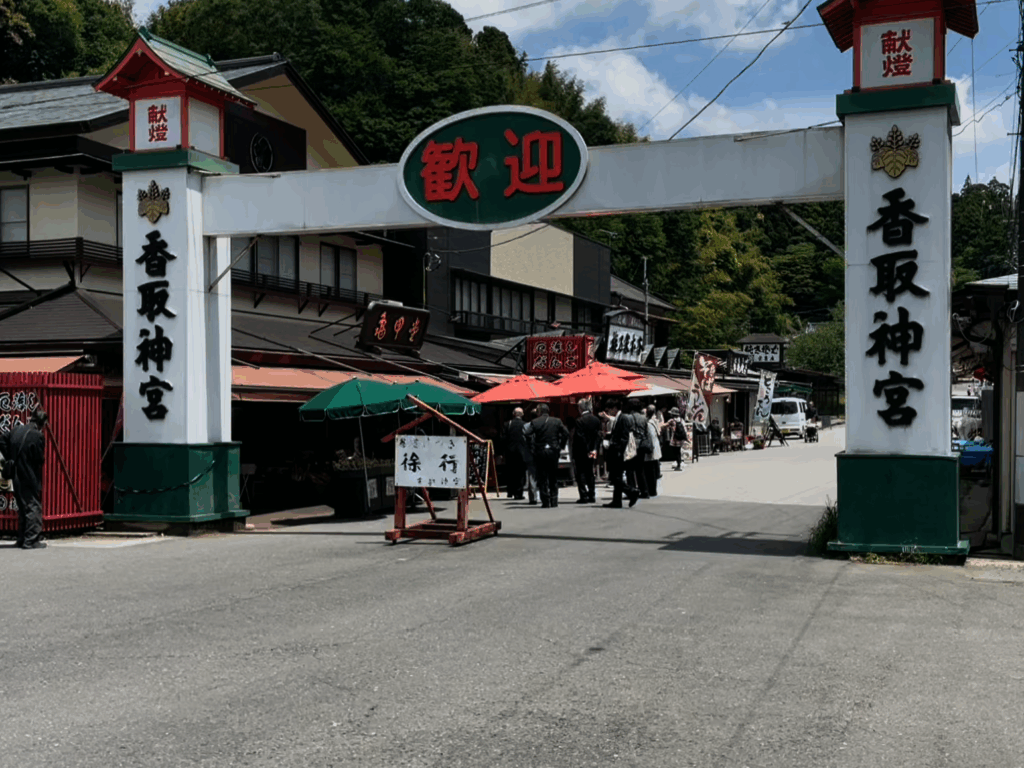
香取神宮についたら,まず目に入るのは門前町です。いくつかのお茶屋さんと,お土産屋さんが軒を連ねています。私のお作法としては,参拝を先にします。ぐるっと回って同じ位置に戻ってこられるので,まずはお宮さんへのご挨拶を先にしましょうか。 When you arrive at Katori Shrine, the first thing you will see is the temple town. Several tea houses and souvenir shops line the street. I usually pay my respects to the shrine first since you can circle back to the same spot. You might want to greet the shrine first.
門前町- Jingu Temple Town
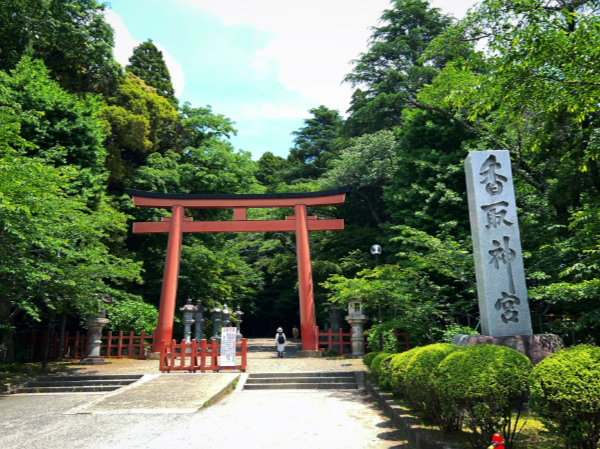
大鳥居- The Great Torii
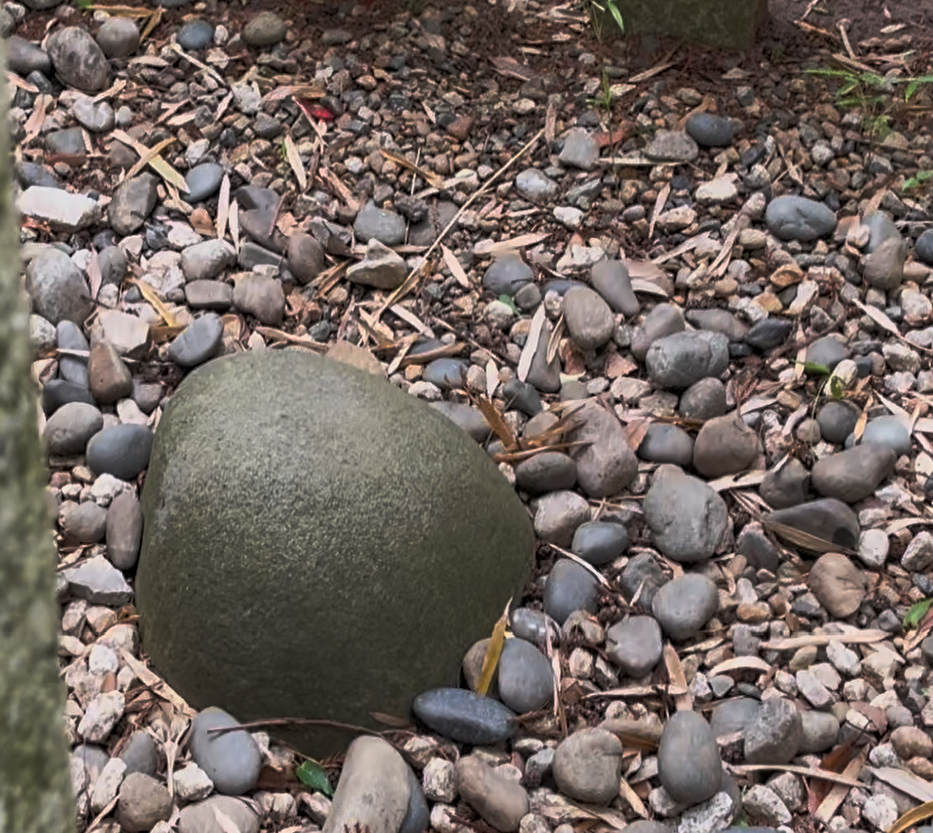
要石- Kaname-ishi
要石の信仰というのは,元々はお隣の鹿島神宮の方から盛り上がったらしく,こちらも後から設置されたもののようです。それでも,長年の信心というのは,場をつくるものですね。 The worship of the sacred stone seems to have originated from the neighboring Kashima Shrine, gaining popularity there first. This one appears to have been established later. Still, long-standing devotion truly shapes a place.
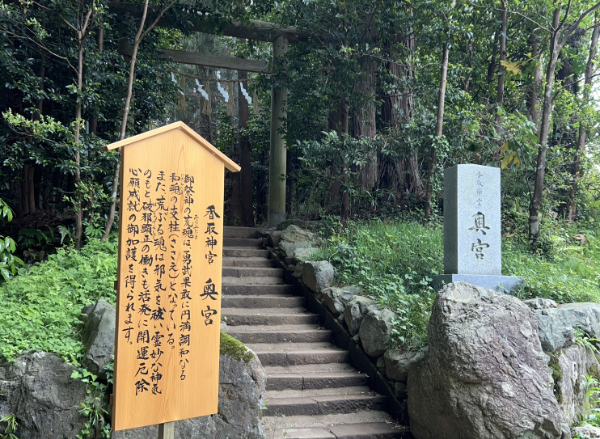
奥宮- Okunomiya-shrine: Aramitama
更には,奥宮というのも近くにありまして,同神宮御祭神の荒魂を祭る場所となっております。個人的には,こちらの方にシンパシーを感じてしまうのですが,皆さん体験してみてね。 Furthermore, there is also an inner shrine nearby, which enshrines the rough spirit of the deity worshipped at the main shrine. I find myself drawn to it, but everyone should experience it for themselves.
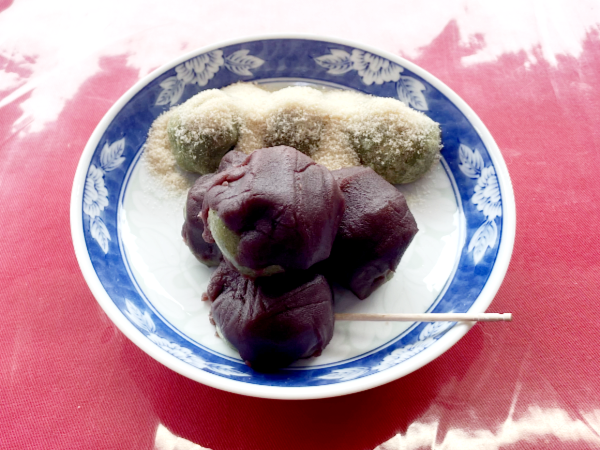
お参りした後は,参道のお茶屋さんに戻ってお茶とお菓子を頂きましょう。 After paying our respects, let’s head back to the teahouse and enjoy some tea and treats.
3.佐原の街並み- Sawara Old Town
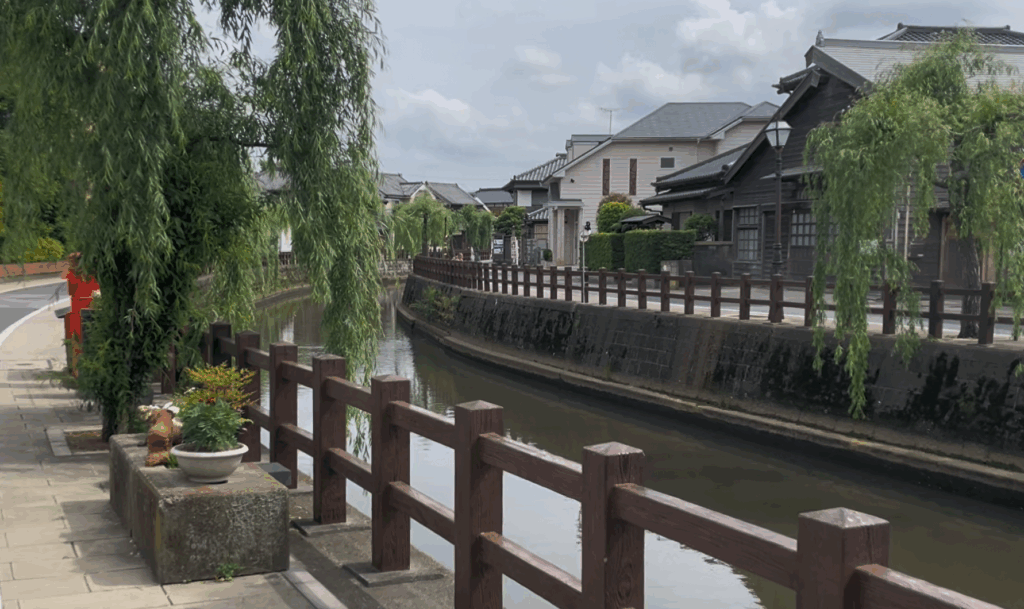
香取神宮をお参りしたあとは,佐原駅方向へ戻ります。香取神宮と佐原駅の間にある佐野川の両岸に,佐原の古い街並みが残っています。 After visiting Katori Shrine, we head back to Sawara Station. The old townscape of Sawara is preserved on both sides of the Sano River, between the shrine and the station.
河原から見た景色はこんな感じ。もっと,それらしい写真が撮れればよかったのだけれど,その辺は動画に譲りましょう。 This is the view from the riverbank. I wish I could have taken a better photo, but I’ll leave that to the video.
佐原の街では,古い民家を利用して,飲食店をされていたり,お土産物屋をされていたりという形で,街並みが維持されています。この雰囲気を味わうだけでも良いのだけれど,個人的にはそれぞれのお店でちょっと食べたりをしたいなーということで,ここでは一つ紹介しましょう。 In Sawara, old houses are used as restaurants and souvenir shops, which helps preserve the townscape. While simply soaking up the atmosphere is enjoyable, I’d personally love to try something at each place, so let me introduce one here.
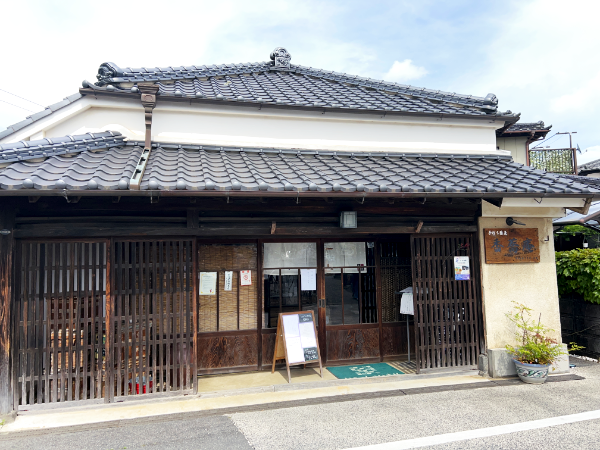
こちらは「手打ち蕎麦 香蕎庵」さん A Soba restaurant “Ko-so-an” is my favorite.
本当なら,予約してコースを楽しむのもよいのでしょうけれども,私は毎回ウォークインでお蕎麦を頂いております。夜の時間帯はフレンチをやっているという奇抜さも佐原っぽい。そちらもいずれお邪魔してみたいところです。 Ideally, making a reservation to enjoy the course menu would be the way to go, but I always just walk in for soba noodles. The fact that they serve French cuisine in the evening hours is quite the unique twist—very Sawara-like. I’d love to try that side of the restaurant someday too.
この日はお蕎麦のほかに,サラダと湯葉・豆腐などのお料理にドリンクと蕎麦というセット。ドリンクはワインなども含め色々選べるけど,私は車だったので辛口のジンジャーエールです。 Besides the soba noodles, the set included a salad, yuba and tofu dishes, a drink, and the soba. There were various drink options, including wine, but since I was driving, I went with dry ginger ale.
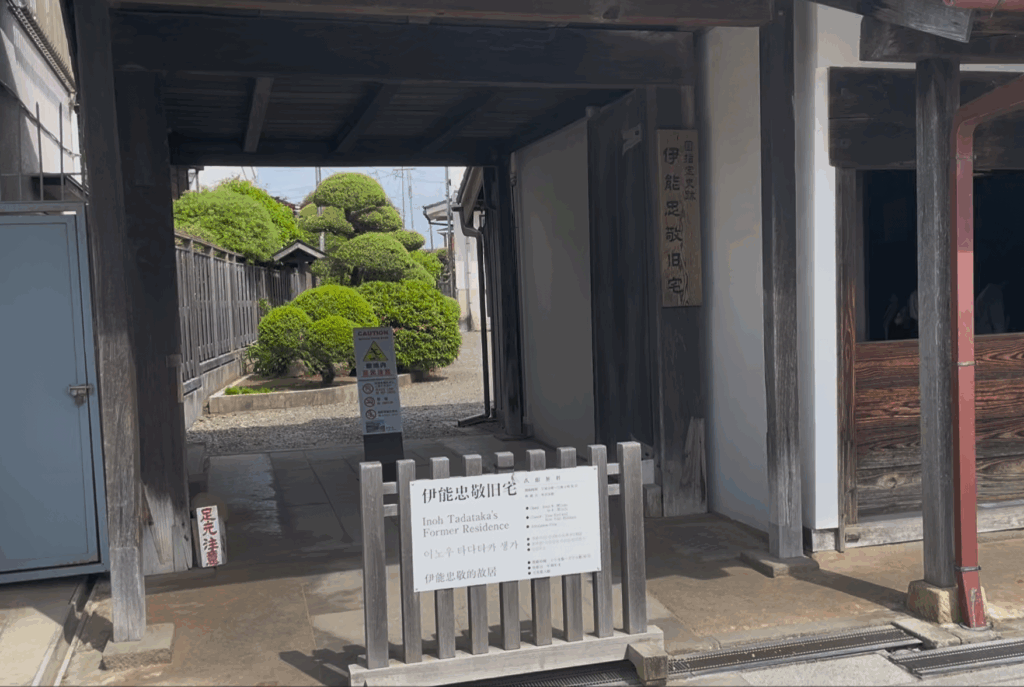
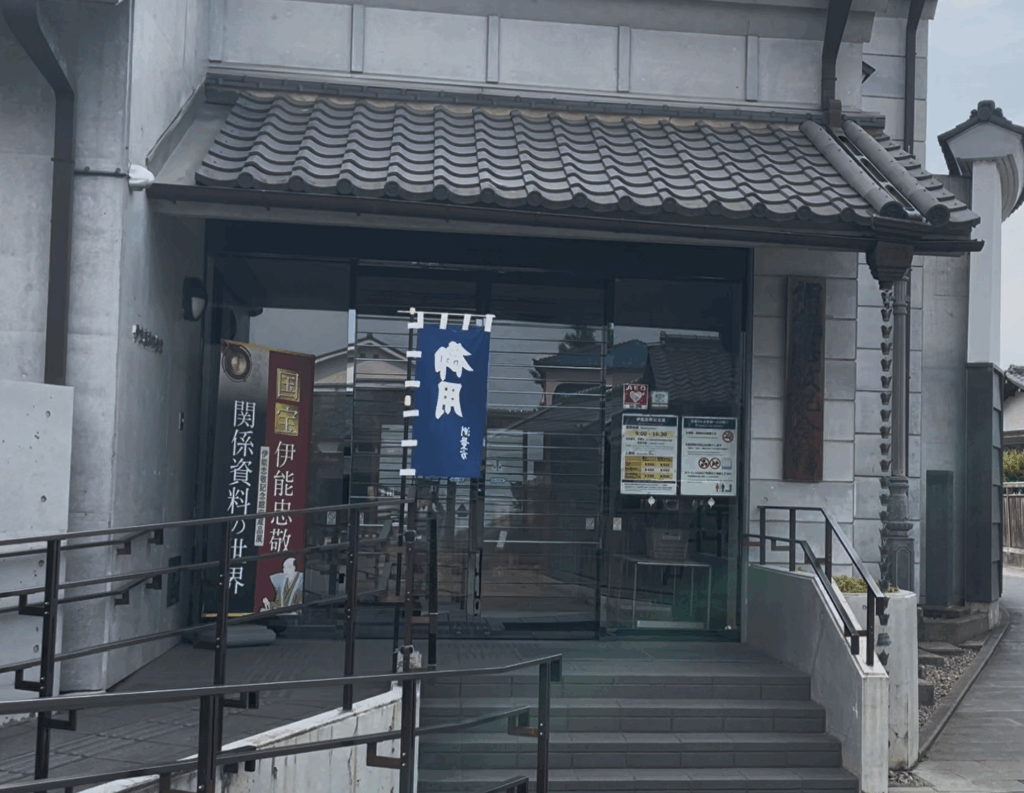
食事のあとは佐原と言えば「伊能忠敬」,今回は旧宅と記念館を訪れました。伊能忠敬は,言わずと知れた精度の高い日本地図を初めて作った方。 また,結構ご高齢になってから,日本全国を周ってその業績を成し遂げた方ということで,知られています。 そのバイタリティに刺激をもらって帰ってきました。 After lunch, I thought of Inō Tadataka. This time, I visited his former residence and memorial hall this time. Tadataka Inō is renowned for being the first to create highly accurate maps of Japan. He is also known for accomplishing this feat while traveling all over Japan at a fairly advanced age. I returned home feeling inspired by his vitality.
250421 #Toke In this post, I am introducing a visit to a museum. It is a realistic painting museum in CHiba prefecture. If you like to enjoy arts in Japan. You can visit them during your stay. This one is a example.
Today’s destination is Toke, in Chiba Prefecture. 本日の行き先は千葉県土気
I visited “HOKI MUSEUM” which deals with realism art. You can find the PR at Tokyo Station. 東京駅で見つけていた例の写実主義美術を扱う「ホキ美術館」にお邪魔した。
I think it’s important that this kind of museum is not in the city, but in a suburban area, and that it has valuable exhibits. 中身は撮影不可なので想像して頂くとして、こういう美術館が都会でなく割と辺縁地域にあって、価値ある展示をしていることを、大事に思う
I didn’t know this before I visited the museum, but it was founded by Mr. Hoki and is named as such. お邪魔するまで分からなかったんだけど、ホキさんという方の創設で、こういう名前がついているようです。
As a person who planned a tour of a certain prefectural art museum a long time ago, I felt that this kind of place could change my daily life a little, and I also remembered how much I enjoyed seeing the realistic paintings exhibited at the prefectural art museum at that time. その昔、某県美の見学ツアーを計画した身としましては、こういう場が日常を少し変えてくれることを感じておりまして、また当時県美に展示されていた写実絵画を愉しんで観たことを思い出したりしました。
There is a bus service from Toke station, so I recommend you to check the bus schedule before you visit the museum. 土気の駅からはバスも出ているようですので、計画に運行時間をみてから訪れることをお勧めします
The question I get asked the most is where to exchange money in Japan and how much is the best? Now a days, most of the shops offers cashless payment. Still, there are some opportunity to use cash in Japan and we do not know when the opportunity comes. You may be missing out on valuable opportunities.
Why Currency Exchange Matters for Travelers in Japan?
What would you like to do in Japan? While it is fun to visit tourist attractions that anyone can enjoy, many people would like to experience something unique to Japan that no one has yet had the chance to experience. Many stores in urban areas are now accepting cashless payment, but there are still many small stores and local stores that accept only cash. In such places, having cash on hand when you need it is the basis for enjoying the opportunity without missing it out.
When preparing cash, it is important to check the exchange rate and fees. This is because, although it depends on how much money you are exchanging, the difference in exchange rates and exchange fees will make up a fairly large proportion of your total travel costs. You should try to minimize them as much as possible.
Against such a backdrop, “where to exchange money” is one of the most common choices for travelers. While it is certainly better to be able to exchange money at the best possible rate and with the least commission, it will not work well if it cannot be integrated into your itinerary. In terms of finding the best rate for your possible itinerary, it is a good idea to arrive in the country with some options as to where the best places to exchange money are.
Where to Exchange Money in Japan: Top Options
For most of you, it is easy to exchange currency in the airport like HND or NRT, although they offer the exchange in normal rate. They may not be avairable in early morning or in midnight. So, you should be aware of your arraval time.
In case you will use some bank branches to do it, they offer confidenciality in relatively high processing fees. Also, you need to consider their buisiness hours.
ATMs in convenience stores like 7-11 (Seven-Eleven), Lawson, FamilyMart etc open 24 hours basis, and you can use credit cards issued in abroads (Visa, Master might work well, AMEX doesn’t work sometimes).
Curency Exchange Offices around tourists areas or big cities offers relatively better rates and processing fees. They are running their services only in big cities.
Convenience
Rate
Airport
Good
Better
Bank Branch
Good+
–
ATMs
Best
–
Currency Excchange
Good
Best
Of these, currency exchange offices offer the best rates. If you plan to exchange money in Tokyo, choose a place where there are many exchange offices and where a large amount of money is exchanged daily to get a good rate. Here are three places I recommend.
Best 3: Shinbashi Station
On the west side of Shinbashi Station (the station has north/south exit), this building “New Shinbashi Building” has a shopping mall. There are so many currency exchange shops. They offer good exchange rates. If you are in Minato, Chuo, Chiyoda city, this place is the first option.
Best 2: Ueno Okachimachi Area
Okachimachi station has a lot of street shops. Therefore, you can exchange money here. Compared to Shinbashi, the rate may be good, but not always. So if you are interested in visiting “Ameyoko” and/or museums in the Ueno area or if you are in Chiyoda, Taito, BUnkyo, Sumida, or Adachi city, this might be your choice.
Best: Shinjuku Station
Particularly, 1-2 Nishi-Shinjuku, Shinjuku city has so many shops. So you can choose here in case you are in Shinjuku, Toshima, Shibuya, Nakno, Bunkyo, Setagaya or Suginami city. They offer the best price in Tokyo.
Tips for Getting the Best Exchange Rates
Compare several shops in the same location instead of going to different places
It is better to find the best rate from several shops in one place than to go to several places to find a good rate. The train fare will cost more than the difference in rates. The rates vary from store to store, even in the same place, so have fun looking for a good rate.
You don’t need a lot of cash, but it is expensive to change money over and over again
As you can see below, many payments can now be made cashless. However, the amount of cash you will need depends on your itinerary and the events you encounter. Therefore, I recommend that you exchange a certain amount of money at the beginning of your trip. I recommend that you exchange a certain amount of money at the beginning of your trip because repeated exchanges will cost you a lot of money in commissions. Also, since the Yen is probably cheaper today than the foreign currency you brought with you, you will probably get a better rate when you exchange your money later, even if you have to bring back Japanese Yen. Having Yen on hand will be a good thing in the future (please make your own decision, I hope the Japanese Yen does not crash too much lol).
Should You Use Cash, Cards, or Digital Payments?
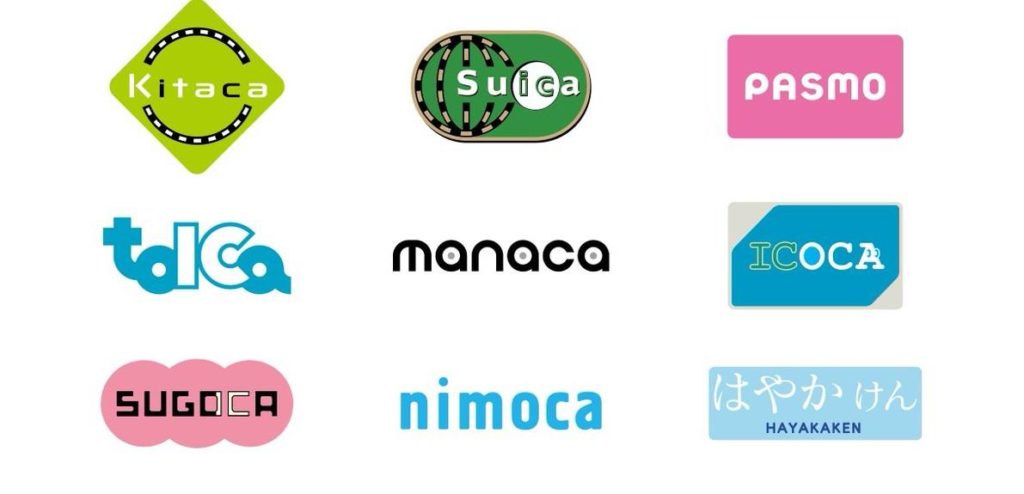
As mentioned above, it is important to have cash on hand when travelling in Japan. At the same time, Japan has developed its own cashless payment system. In addition to touch payment with credit cards, there are a variety of other payment methods, such as IC cards by transport system (Suica, PASMO, etc.) and QR code payment systems developed by various companies. It is not necessary to use all of them, but it may be useful to introduce some of the more convenient payment methods.
These are all the Icons for the IC cards developped by the transportation system campanies. They are used in specific place in Japan and sometimes do not work when you go beyond the boundaries of the areas in Japan. They can be used in all the areas, but cannot be used across two or more areas. Be careful on this point.
However, having such IC card once, you can decrease the amount of currency exchange. Once you charge money on the card, you can use it anytime during your trip.
Conclusion: Plan Ahead for Stress-Free Currency Exchange in Japan
In this page, we recommended currency exchange in Japan and gave some specific place to exchange. We hope this page will help you to exchange currency in your trip and to have nice trip.
三連休に外に出歩こうなどと考えたのは、久しぶりかも知れない。奄美以来20年ぶり位の旅行記を書こう。 It may have been a long time since I thought of going out for a three-day weekend. It has been about 20 years since I wrote about my trip to Amami.
前の投稿にも少しさわりを書いたけれども、この連休でどこかへ自分を連れていこうという気持ちだけはあった。そして、新幹線の混み具合を見たら大したことなかった。 I wrote a little bit about it in my previous post, but I was only willing to take myself somewhere during this holiday weekend. And when I saw how crowded the bullet train was, it was no big deal.
じゃあ行こう Then, I should go
という事で、兼ねてから行きたかった斎宮と日吉大社を目指す事にした。 So we decided to go to SaiGu and Hiyoshi-taisha shrines, which we had wanted to visit for a long time.
斎宮 こちらは、齊藤さんのルーツを探した際に出てきて知ったもので、伊勢神宮に神様に鎮まって頂くにあたり、天皇の皇女が側(斎宮)に行くことになり、その斎王のサポートとして藤原さんが仕えたのが最初らしいのだが、実地で確かめねばなりますまい。 This is something I came to know when I searched for the roots of Saito-san. It is said that the Fujiwara clan served as support for the Saio, she were emperoers’ daughters who asked to reside in SaiGu with Ise Shurine-Amaterasu , and the Fujiwara’s descendants took the name Saito, but I will have to confirm this on site.
もう一つは Another one 日吉大社 こちらは、先日佐賀の吉野ヶ里遺跡で石棺が出たときにニュースの中で「そこには日吉神社があった」事を知った。勝手に妄想が走り出した私は(なんぞ?地元の人は何らかの事情を知ってそこに日吉神社を置いたんではなかか?)と思ったのだが、専門家によれば明治期に元お城などの誰のものでもなくなった土地は、そうやって神社や県庁・市役所にされたのだそうだ。 関連して調べると、日吉神社とは私たちのよく知る日枝神社の事で、更に比叡山の比叡でもあり、そして遡ると琵琶湖西岸にある、こちらの日吉大社がその親玉らしいと知った。→行くでしょ The other day, when a sarcophagus was found at the Yoshinogari ruins in Saga, I learned on the news that there was a Hiyoshi Shrine there. My imagination started to run wild on its own (“What? The locals must have known about the situation and placed the Hiyoshi Shrine there,” I thought.) According to experts, land that no longer belonged to anyone, such as a former castle, was turned into a shrine, prefectural government office, or city hall during the Meiji period (1868-1912). In addition, I learned that Hiyoshi Shrine is the Hiei Shrine that we know so well, which is also the Hiei of Mt. Hiei, and that Hiyoshi Taisha here on the west shore of Lake Biwa is the parent of the Hiei Shrine. →We would go there.
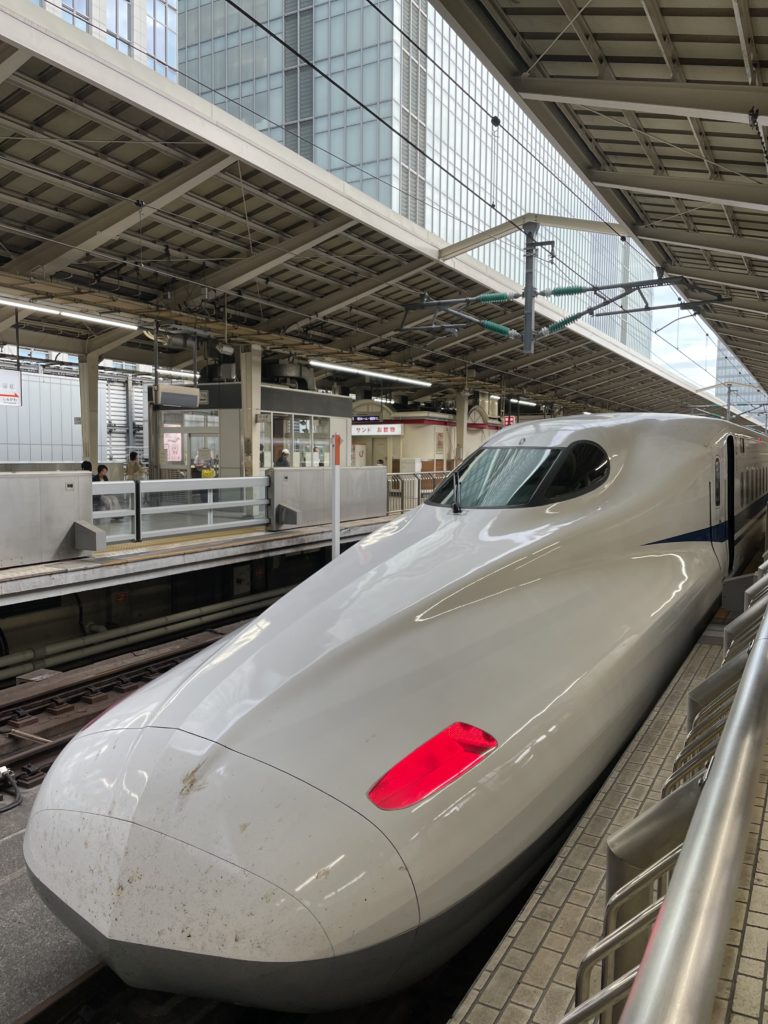
仕事を終えて 1800発のぞみ🚅新大阪行き えきねっとで取ると 少し割引が効く ついでにその先の切符も購入。最寄駅に指定席券売機があれば、そこで受取もできる。前は錦糸町駅までわざわざ行ってたから、これまた一手省くことができた。 東西線大手町で降りて東京駅に向かうも、地下で迷う。地下街のほぼ全ての店舗が閉まっている中、唯一開いていたスタバの店員さんにJRの駅はどっち?と聞くと「東京駅ですか?」との問い。地上に出てみると確かに、最早神田にも近い。 恒例の日本橋口まで歩いて即乗車。指定席はこの入り口からだと遠い。だから、日本橋口を選ぶなら自由席がベター(ただし、時期による)。 After work 1800 Nozomi🚅 to Shin-Osaka If you take a ticket with “Eki Net”, you can get a little discount. you can get a little discount. And you can also buy a ticket for the rest of your trip. If there is a ticket machine at the nearest station, you can pick up your ticket there. I used to have to go all the way to Kinshicho Station, so I was able to save another step. I got off at Otemachi Station on the Tozai Line and headed for Tokyo Station, but got lost in the underground. Almost all the stores in the underground mall were closed, but I asked the clerk at the only Starbucks that was open which JR station was. He asked, “Tokyo Station? He asked, “Tokyo Station? I went to the ground level and sure enough, it was close to Kanda. I walked to the Nihonbashi exit and boarded the train immediately. The reserved seat is far from this entrance. Therefore, if you choose the Nihonbashi exit, it is better to take a nonreserved seat (but it depends on the time of the year).
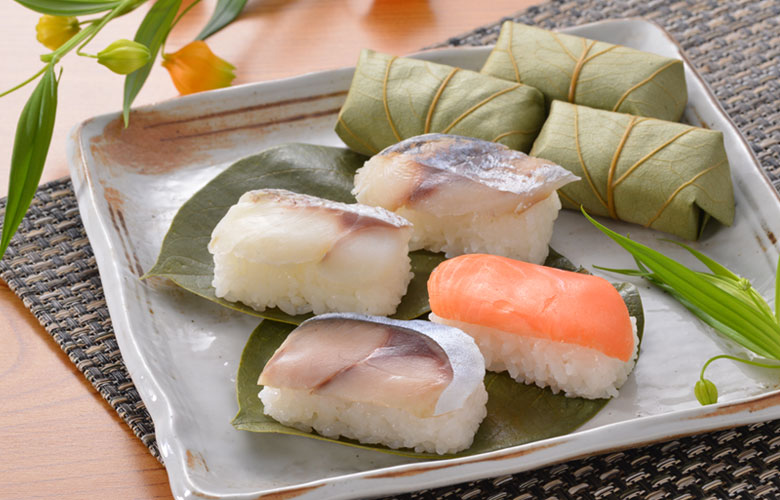
のぞみに東京から乗る経験は初めてに近い。新横浜の次が名古屋だから静岡には止まらない(含笑)。道中寝るかなーと思ってたけど、お腹が空いていたせいで、柿の葉寿司を買い、パクパク食べていたらもう丹那トンネルを抜けていた。 This is close to my first experience riding the Nozomi from Tokyo. It doesn’t stop in Shizuoka because the next stop after Shin-Yokohama is Nagoya (inclusive laughter). I thought I might sleep on the way, but due to my hunger, I bought some Kakinoha Sushi, and while I was crunching down on it, we were already through the Tanna Tunnel.
見慣れた三島の駅舎をすり抜けるのにチラと富士山方向を見るも、鉄板の曇り空。お隠れになっている。反対側に目を向けて、伊豆半島が島である事を確認し(こちらもゾウ山から達磨山、御瀬まで雲の帽子を被っているが、海際の低いところは見えている状況、夏によくある)、千本松原から富士川河川敷も変わらず平らな事を確認し、よしよし世の中は平らだと自己満足。静岡駅までの間に県大を遠くに眺め、地面に生えた船を横目に見て、るくるのビルが建っているのを確認した。 Fuji as we passed through the familiar Mishima station building, but the sky was overcast with iron plates. Fuji, but it was hidden from view. Turning my attention to the other side, I confirmed that the Izu Peninsula is an island (here, too, Mt. Zou, Mt. Tatsuma, and Ose are covered with cloud caps, but low areas by the sea are visible, a common situation in summer), and I confirmed that the Fuji River bed from Senbon Matsubara is as flat as ever. On the way to Shizuoka Station, I looked at the prefectural university in the distance, saw the Grand-Ship growing on the ground beside it, and confirmed that the Rukuru building had been erected.
静岡を過ぎると少し眠気、気づくと浜松を過ぎていたが、舞阪の卓球用具屋さんを眺め、元自宅を眺め、弁天島の鳥居を眺め、新居の関所を裏からチラ見し、振り返ると元勤務先が山の上に見える。トンネルを過ぎたらスズキの工場と風車を眺めて、現状確認完了。 After passing Shizuoka, I felt a little sleepy and realized that I had passed Hamamatsu. I looked at the table tennis equipment store in Maisaka, looked at my former home, looked at the torii at Bentenjima, glanced at the Arai-barrier from the back, and looked back and saw my former place of employment on the mountain. After passing the tunnel, we looked at the Suzuki factory and the windmill, completing our check of the current situation.
あとは、名古屋まで見るべきものはないので、隣の席に座ったお仕事に勤しむ方をよそ目に、この作文を始めた。 There was nothing else to see until Nagoya, so I started this essay aside from the person seated next to me who was working at his job.
名古屋
名古屋駅も随分久しぶりで、前に教育工学会に参加したのが最後で、これより西に行くのも久々。 駅では乗り換え案内に出てた番線とは違うところから、南紀7号に乗り換える。少し新幹線ホームから近くなってて、時間がないなりに、スムーズに乗り換えられた。 It has been a long time since I was at Nagoya Station, the last time I attended an educational engineering conference, and it has also been a long time since I have been west of here. At the station, I transferred to the Nanki No. 7 train from a different platform than the one shown in the transfer guide. It was a little closer to the Shinkansen platform, so the transfer went smoothly, although I didn’t have much time.
南紀は新宮行きとなってたので、いずれこれに乗って熊野詣でへ行きたい。或いは、南紀白浜空港経由かな? Nanki was bound for Shingu, so I would like to take this to Kumano for a pilgrimage at some point. Or maybe via Nanki-Shirahama Airport?
それはさて置き 南紀はディーゼル?とのハイブリッドらしく、電車のくせにエンジン音がする。何故このような仕様の列車が存在するのか、あとで確認したい。 The Nanki seems to be a hybrid with diesel, and even though it is a train, it has an engine noise; JR seems to be looking for a more environmentally friendly style.
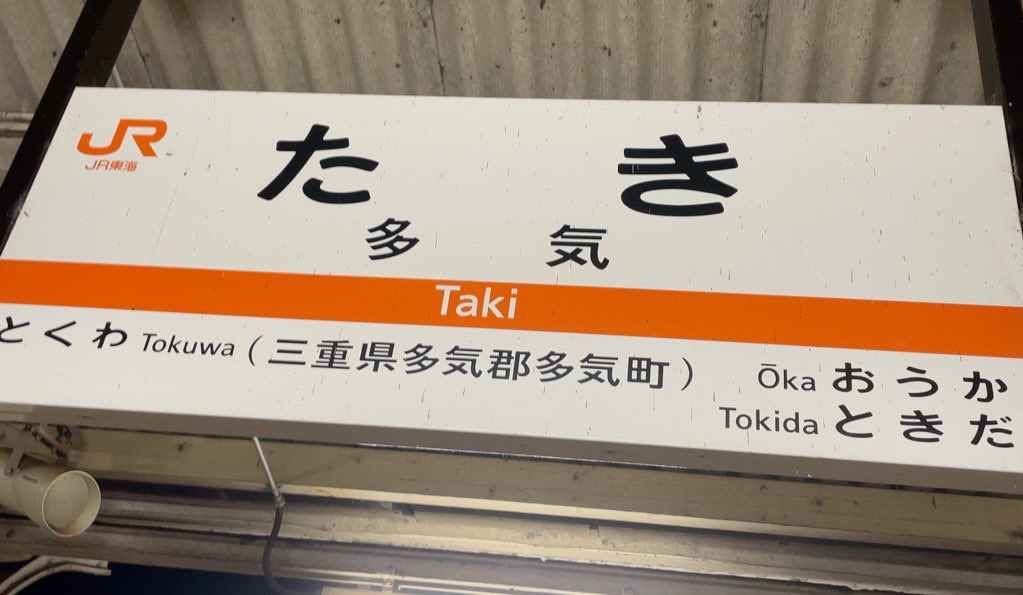
これでタキと読む。行く前はタケと読むものと記憶していたが、どうやら違ったらしい。伊勢市駅の手前までとなると、ここまでが特急。南紀を降りた。 田んぼの真ん中のホームで電車を待っていると、田んぼと虫と肥料の匂いがする。そう言えば、コロナ期間ではマスクをずっとしていたので、匂いを感じる機会が少なかった。こないだ、新木場の駅でも潮風を感じたけれど、こういう匂いも季節や場所やその他の繋がりを感じさせてくれるものだった。 多気に着いた鳥羽行きの列車に乗って、いざ伊勢市駅方面へ…と落ち着く気持ちになった矢先、目の前に停車した反対向きの電車内が満杯になっている… This is how I read Taki. Before I went there, I thought that it is read as “Take,” but apparently I was wrong. To go Ise-shi Station, this is the end of the limited express. I got off the Nanki. Waiting for the train on the platform in the middle of rice fields, I smelled rice plants, insects, and fertilizer. Come to think of it, I didn’t have much of a chance to smell them because I wore a mask all the time during the corona period. The other day I felt the sea breeze at Shinkiba station, but these smells also remind me of seasons, places, and other connections. Just as I was getting ready to get on the train bound for Toba at Taki and start heading toward Ise-shi Station…, the train stopped in front of me in the opposite direction and that was full…
どこかに出かけるときに避けるべき一連のものたちですね。 夏祭り客が現れた! みたいな、ドラクエの敵に出くわす並の突然さ、「さいとうはおどろき、とまどっている」で、1ターン損した感じ。多気から伊勢市駅までの記憶がない。 These are a series of things to avoid when going out somewhere. Summer festival guests show up! Like, as sudden as running into a Dragon Quest enemy, “Saito is frightened and baffled,” and you feel like you’ve lost a turn. I don’t remember anything from Taki to Ise-shi station.
伊勢市宿泊 Stay in Ise
今回は、割と近いところに泊まれて、外宮まで徒歩圏内。ホテルのフロントは早速国際化していて、インド系の彼が受付してくれた。外国からの観光客対策でもあるだろう。この辺は、地元もそうなっていくと思われる。ホテルの部屋は快適で寝て起きただけ。アメニティは最低限の歯ブラシ。その他は、一階から持ち上がる形をとる。 朝食をホテルで食べるという贅沢をしてしまった。 This time, we were able to stay rather close and within walking distance to the GeKu shrine. The front desk of the hotel was promptly internationalized, and he, a English speaker, was the receptionist. This is probably a support for foreign tourists. It is expected to be the same for the locals in this area. The hotel room was comfortable and I just slept and woke up. Amenities are minimal, a toothbrush. Everything else is taken from the ground floor around reception. I had the luxury breakfast at the hotel this time.
外宮(げくう)GeKu Shurine
こちら衣食住の神様、豊受大御神を祀る外宮は雄略天皇の22年に御鎮座との事なので、垂仁天皇の26年に鎮まった内宮よりも随分後にこちらに来られた事になる。 参拝も3回目以上?となると、見た目に慣れてくるが、今回は車で来なかった事が、これまでとの違い。いつも右から来る入り口に左から到着し、お邪魔する。 The GeKu Shrine, which enshrines Toyoke-no-Omikami, the god of food, clothing, and shelter, was built in the 22nd year of the reign of Emperor Yuryaku, which means that the shrine was built much later than the NaiKu Shrine, which was built in the 26th year of Emperor Suinin. This is the third time or more that I have visited the shrine. However, the difference was that we did not come here by car this time. I arrived at the entrance from the left this time, whereas I usually come from the right side.
そう言えば、宿から宇治山田駅前を通る道すがら近所のおばちゃんに声をかけて頂いて「外宮はどっちですか?」の問いに 「げくーさん?げくーさんはそーやねぇ…」というやり取りがあり、地元の方はげくーさんと読んでいる事を知った。参拝については省略。 By the way, on the way from the inn to Uji Yamada Station, I was approached by a lady in the neighborhood who asked me, “Which way to the outer shrine? to which she replied She asked, “Geku-san?” I learned that the locals read it as “Geku-san” with respect. Omitting the details of the visit to the shrine.
内宮(ないくう)NaiKu Shurine
泊まった宿の壁に写されていた映像によると、伊勢詣りは前日入りで一泊後に外宮、更に一泊して内宮に参るのが畏敬の念をあらわす作法らしい。 現代人は私のようにズカズカ入っていって、サッサと帰ってしまう。観光業を支えた御師の方々の上手な営業話法かもしれないが、それもそうだよなと、納得してしまう。そもそも、斎宮探究のついでとは、何たる不敬か😌 ともかくも、内宮さんにもご挨拶をして、こっちでは世の中の安寧を願っておいた。多分、祀られてる神さん的にも合っているはず。 「その他諸々は、その他の神仏諸氏にお願いしておきますので、何卒御高配のほど」と。 According to a video on the wall of the inn where I stayed, it is considered to be an awe-inspiring way to visit Ise, arriving the day before, staying one night and visiting the GeKu shrine, and then staying one more night and visiting the NaiKu shrine. People of today, like me, enter Ise without hesitation and leave without a moment’s hesitation. This may have been the skillful salesmanship of the masters who supported the tourism industry, but I couldn’t help this time but agree with them. What an impoliteness to have visited the shrine in the first place as a side trip to explore the SaiGu😌. Anyway, I also greeted the Naiku shrine and wished for peace in the world. That may fit to the character of the God who is enshrined here. “I will ask the other gods and goddesses to take care of other (personal) matters”.
On my previous visit, I think I got Akafuku at the store right after crossing the bridge on the way home, but when I saw a sign that said there was a main store 400 meters away, I had the idea of going there as well. I actually went there and found that more than 200 pairs of numbered tickets had been issued in the order of waiting. I don’t know if they would go that far ……. The only solution would be to eliminate the seats and sell them by hand, but that’s not going to happen at a tea store. … … … Akafuku must be at the foot of the bridge. Or rather, they must be freshly made. The Akafuku I had here before was the best I’ve ever had. We had no choice but to go back a bit and switch to Ise udon lunch. This was the first time I had cold udon, and it was delicious, with the softness of hot udon, but soaked in a thick broth. I also got some frozen amazake on the side of the road, which was also delicious. I was sweating a lot at this point, but I was well-prepared for the heat and decided to visit three more museums: the Jingu Art Museum, the Jingu Chokokan, and the Jingu Agricultural Museum (which I had not planned to visit).
神宮三館 Three Jingu Museums
存在自体知らなかったのだけれど、内宮に紹介ポスターがあったので、訪問。 個人的には徴古館が好きだったけど、その他二館もこぢんまりまとまっている。初めに行ったのは美術館で、ここだけでも良いつもりだったけど、2時間あれば全部いけるとの受付さんの情報で全部回る事にした。 式年遷宮の資料と、そのときの人々の持ち物を見ると、細かなデザインが面白かった。細かな意匠は日本的だし、誇れる文化だと思っている。さて、ではいよいよ本丸の斎宮へ行こう。 I did not know they existed, but I saw a poster introducing them at the NaiKu Shrine, so I visited. Personally, I liked the Chokokan, but the other two museums are also very small and cozy. My first stop was the Museum, which I had planned to visit only, but the receptionist informed me that I could visit all of them in two hours, so I decided to visit them all. I looked at the materials on the ceremonial relocation of the shrine and the belongings of the people at that time, and found the detailed designs interesting. The detailed design is very Japanese, and I think it is a culture that we can be proud of. Now, let’s finally go to the main shrine, SaiGu.
斎宮(さいぐう)SaiGu
中々忙しそうで少しだけど混み合ってるバスで宇治山田駅まで戻り、近鉄に乗車「斎宮」駅へ。バス停へ向かう道すがら、時間がないのに別宮のひとつ倭姫宮を見つけてしまい、参る。寧ろ、ここも本筋の目的と合致していたのかも知れないのだが、この時点では勉強不足。中学校の教科書?に誰だったか、旅に出る前に勉強し過ぎるなとか書くからいけない(他責思考)、勉強のせいで今、自分をここに連れてきているくせに、勉強してから行きたくないという、矛盾と向き合う(笑) I took a moderately busy and slightly crowded bus back to Uji Yamada Station and boarded a Kintetsu train to “Saigu” station. On the way to the bus stop, I found and visited one of the separate shrines, Yamatohime-no-miya, even though I had no time to visit it. I was not sure if this place was also in line with my main purpose, but at this point, I had not studied enough. I had read in a junior high school textbook? I was facing the contradiction of not wanting to go there after studying, even though I had brought myself here now because of my studies.
バス停で待っていると、同じように外宮・内宮・倭姫宮を巡ったというご夫妻に出会い、話しかけてもらう。バスが全然来ないんです〜と嘆き、一緒にバスを待ち、「今からルーツを探しに斎宮へ行くのです」と話し、宇治山田駅で別れる。 While waiting at the bus stop, we met a couple who had also toured GeKu, NaiKu, and Yamatohime-no-miya Shrines, and asked to speak with them. They lamented that the bus was not coming at all, so we waited for the bus together, told them that we were now going to SaiGu to look for our roots, and parted at Ujiyamada Station.
斎宮の駅は無人駅。出口には出入り用のIC乗車券を読む機械がむんずと座している。 駅の北側に広がる広い土地がそのまま残されている斎宮跡だけど、実際の位置はよく分かってなかったらしく、上に人家が載っている部分もある。また、その施設そのものが廃れてから随分時間が経っていた事もあり、地元で言われていたのと、実際に発掘調査で出てきたものの場所がズレていたなどの事も分かってきたそうだ。 結論からいって、今回の訪問では齊藤さんのルーツは分からなかった。 Saigu station is unmanned. At the exit of the station, a machine that reads IC tickets for entering and exiting the station is sitting there. The large area of land to the north of the station remains as it was when it was built, but the actual location of the Saigu site was not well known, and there are parts of the site with houses on top of them. It seems that the actual location of the Saigu site was not well known, and there are some houses on top of the Saigu site. Also, it has been a long time since the facility itself was abandoned, and it is now known that the actual excavation results were not in line with what the locals had said. In conclusion, we could not find Saito’s family roots during our visit.
斎宮(さいぐう、いつきのみや) SaiGu so called Itsukino-miya
斎宮は天皇の皇女か、女王(にょおう:皇族の女性)が斎王(さいおう)として送られた場所、後に斎王の事も指した。 斎王は、ほかには天皇と皇后しか乗れない惣華輦(そうかれん)に乗って、都から斎宮へ向かった 天皇が崩御するか、位を譲るかするまで、斎王は斎宮に留まり、場合によっては帰京できなかった(二度行った方もある) 段々制度化し、斎宮を司る斎宮寮なる組織ができる(寮て高校日本史の教科書でチラとみた記憶、律令制の一部)これにより、斎王を支える女官組織と、律令体制の文官組織の二本立てで国家予算がつくところになる 寮の官職に藤原氏が就く(初期は藤原さんじゃなかったから、やはり藤原さんは、その時期なのでしょう) The SaiGu was the place where the emperor’s daughters or princesses (NyoOh: women of the imperial family) were sent as Saio, which later also referred to the Saio. The Saio was transported from the capital to the SaiGu in a palanquin, a palanquin that could only be carried the emperor and empress. The Saio remained at the SaiGu until the Emperor’s death or abdication of the throne, and in some cases could not return to Kyoto (some Saio went to SaiGu twice). The system was gradually institutionalized, and an organization called the Saigu-ryo was established to administer the SaiGu (I remember reading about Ryoh in a high school Japanese history textbook, and it was a part of the Ritsuryoh system). The Fujiwara clan was appointed to the official position of the Ryoh (it was not Mr. Fujiwara in the early days, so it must have been his time).
今後は、オフサイトでも調べられる事から知識の穴を埋めていって、もう少し補完する予定。とりあえず、斎宮広くて、駅から歴史博物館とか歩いたので、まぁまぁ疲れた。それでも、欲張りな私は、更にもう一個の目的地へ移動するのでした。 In the future, I plan to fill in the gaps in my knowledge from what I can find off-site and supplement it a bit more. At any rate, I was quite tired because I had to walk from the station to the history museum and other places in the large Saigu area. Still, being the greedy person that I am, I moved on to another destination.
松阪、大和八木、京都 Matdusaka, Yamato Yagi, & Kyoto
近鉄の電車に乗ったのは初めてか、久々。行きはJRだったしね。しかも、乗り換え案内の推薦上位は名古屋まで帰ってからの→新幹線京都→大津だったのだが、なんか名古屋に戻るのが違う感じがして、そのまま西進したい気持ちに。 そこで、推薦順位は低いけれど、一度奈良へ出て、そこから京都、湖西へというルートを取ることにした。松阪で特急に乗り換え、西へ。奈良の大和八木なる駅で北向きに乗り換えて、京都駅へ。 普通、京都に寄りたくなるじゃん。だがしかし。グッと堪え、東寺の塔を遠目で眺めてよしとする事にした。 This is the first time I have taken a Kintetsu train, or it has been a long time. And it was JR on the way there. Moreover, the top recommendation on the transfer guidebook was to return to Nagoya and then take the Shinkansen to Kyoto and moving toward Otsu, but I felt that returning to Nagoya was not the same thing, and I wanted to continue westward. So, although the recommendation was low, I decided to take the route to Nara, then Kyoto, and then to Kosai. I changed to the express train at Matsusaka and headed west. At Nara’s Yamato Yagi station, we changed trains northward to Kyoto station. Normally, you would want to stop in Kyoto, right? But, however. I decided to hold back and just admire the pagoda of Toji Temple from a distance.
京都→琵琶湖線 Kyoto-Biwako Line
いよいよ行ったことのない範囲に足を踏み入れよう。琵琶湖の西岸。 昔、彦根城へ来た覚えがあるし、石川福井へ行くのに湖東を走るサンダーバードに乗ったり、富山石川巡業から大阪へ入るのに、そこを逆走したりしている。 西岸はあんまり歴史的に興味ある話がなかったり、比叡山が京都から入るものという先入観があったりして、行きそびれてきたらしい。 それにしても、この大津に来る為に、必ず京都を通らなければならないつくりはなんなんだろうか?名古屋から在来線で来れば入れるんだけど、それよりも特急か新幹線で京都を通る方が速い設定になっている。まぁ当たり前か。 今回、日吉大社を目指して来たけど、これまたスピンオフ的に比叡山を攻めるのも良いかも知らん。さて、明日の出発は早目に行こう。どうやら同じ宿に高校生が泊まっており、朝食会場の占拠が予想されるとの事、そのあと早目にってとこですかね。 Let’s finally step into the range where we have never been before. The western shore of Lake Biwa. I remember visiting Hikone Castle in the past, taking the Thunderbird running east of the lake to go to Ishikawa-Fukui, and driving backwards there to enter Osaka from the Toyama-Ishikawa buisiness trip. I have been missing the West Bank because of a lack of interesting historical stories and a preconceived notion that Hieizan (Mt. Hiei) is accessed from Kyoto. By the way, what is it about Kyoto that makes it necessary to pass through it in order to get to Otsu? If you take a local train from Nagoya, you can get in, but it is faster to take the limited express or the Shinkansen through Kyoto. Well, is it any wonder? History has decided it. I came here to visit Hiyoshi-taisha shrine, but it might be a good idea to go to Hieizan as a spin-off. Well, let’s leave early tomorrow. Apparently, there are high school students staying at the same inn, and they are expected to occupy the breakfast room, so I guess we should leave early after their storm.
坂本比叡山口 Sakamoto Hieizan Guchi
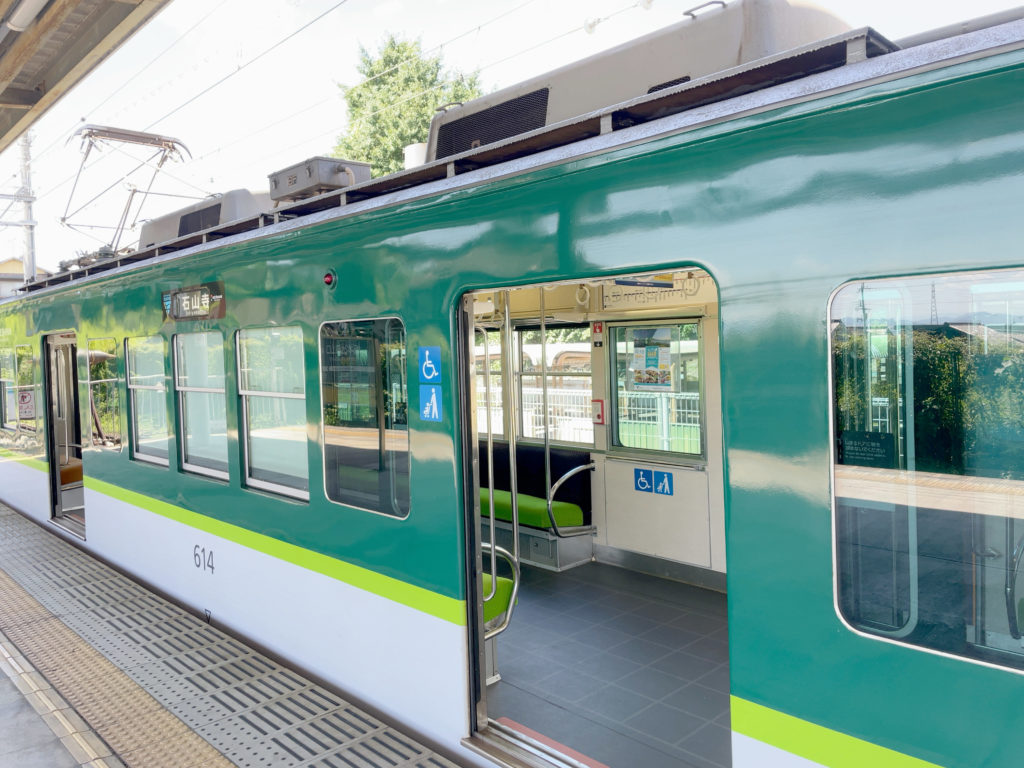
日吉大社は、坂本比叡山口駅から比叡山に真っ直ぐ登っていった麓にある。その脇から、比叡山に登るケーブルカー(日本最長)が出ているから、信仰の本は同じ感じなんだろうか。これも、後で調べよう。 大津からここに入るにも、どういう訳か、一度山科まで戻るか、或いは逆に東進して、膳所(ぜぜ)で京阪電車に乗り換える必要がある。今回は行ったことのない世界を目指して、後者を選ぶ。 京阪電車はレトロ感があるけど、古くない車両🚃というイメージ。車両とシートがみどり色。すきすきの車両に地元の方がちょいちょい乗っている。いなか的使い方だけど、都会の近くだから、経営状態は悪くはなさそう。 Hiyoshi Taisha Shrine is located at the foot of Mt. Hiei straight up from Sakamoto Hieiyamaguchi Station. I wonder if the book of faith is the same since there is a cable car (the longest in Japan) that goes up to Mt. Hiei from its side. I will look into this later. For some reason, even to enter here from Otsu, one must either return once to Yamashina, or go eastward in the opposite direction and change to a Keihan train at Zeze. This time, I chose the latter, aiming for a world I had never been to before. Keihan trains are retro but not old 🚃. The cars and seats are green. The locals are often riding in the quiet cars. The trains are used in a rural way, but since they are near the city, they seem to be in a good business condition.
暑さと腹調と写真 Heat, condition and photos
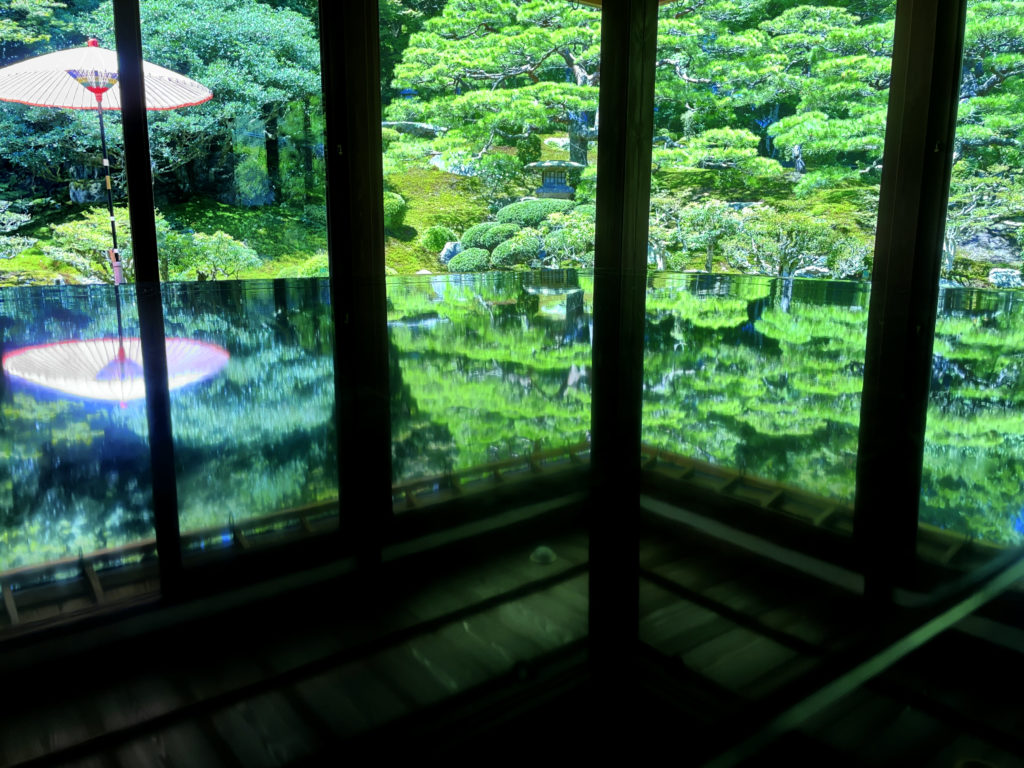
さて、朝飯を食べて出かけようかというところで、例によって腹の調子がようない。珍しく一日3食食べたりするから、活性化中なのか、或いは暑さに腸内菌叢がやられたのか、とりあえず坂本口まではたどり着いたが、どうもよろしくない。気を取り直して坂道を登り始めると、右手に旧竹林院なるお宅?を発見。庭でも見ながら落ち着くのを待つ。 庭の見える床の間で座らせてもらって、庭を眺め、パシャパシャ写真を撮るなどしているうちに、落ち着いてきたので、そのままお庭をひと回り。そして、大社へ。 As I was about to eat breakfast and head out for the day, my stomach was not feeling well, as usual. I wondered if it was because I ate three meals a day, which is unusual for me, or if my intestinal flora had been damaged by the heat. I got myself back on track and started up the hill, and found the old Chikurin-in house on my right. We found the old Chikurin-in house on the right side of the road. We sat down in an alcove overlooking the garden and waited for things to settle down. I sat down in an alcove overlooking the garden, looked at the garden, and took a few pictures. Then, we went to the shrine.
日吉大社
前述の通り、日吉大社⛩️は日枝神社⛩️とか山王神社⛩️の総本宮。時代としては、お伊勢さんよりも早くにできたものらしい。東京の溜池山王と赤坂見附の間に日枝神社があるけれど、あちらも山王信仰の賜物なので東京民は割と近くに馴染みがある。 比叡山から流れる川を隔てて山側に社があるイメージ。川を渡る為に三つ橋があるが、今実際渡れるのは一つだけ?みたい。他の一本は、新しく掛け直したのが横にあって、秀吉が寄進して、江戸時代に渡しなおした石造の橋は渡れなくしてあるのを見た。もう一本は姿を拝めなかった。 日吉大社は西宮と東宮があって、それぞれに小さなお社を幾つも摂っている。一つひとつに祀られている神さんが違うけれども、一つひとつ全部まわってきた。 暑いけれども、水が豊富な土地だから、機会がある度に手を洗い、水を薄くかぶり、顔を洗いしながら参った。 病気のこと、コロナ禍の平常化のこと、世の中の安寧のこと、戦争紛争のこと、貧困のこと、事業のこと、願う相手ごとに色々と変えてみた。 As mentioned above, Hiyoshi Taisha ⛩️ is the head shrine of Hie Shrine ⛩️ and Sanno Shrine ⛩️. In terms of age, it seems to have been established earlier than Ise Shirines. There is a Hiei Shrine between Tameike-Sanno and Akasaka-mitsuke in Tokyo, but Tokyoites are more familiar with the nearby Hiei Shrine, which also originated from the Sanno faith. The shrine is located on the mountain side opposite the river that flows down from Mt. There are three bridges over the river, but only one is actually passable now. The other two bridges have been rebuilt side by side, and I saw that the stone bridge donated by Hideyoshi and rebuilt in the Edo period had been made inaccessible. I could not see the other one. The Hiyoshi-taisha Shrine has a western shrine and an eastern shrine, each with several small shrines. Each shrine is dedicated to a different deity, but we visited them all in turn. Although it was hot, the land was rich in water, so each time I had a chance to pray with the shrines, I washed my hands, took a drop of water and washed my face. I tried to pray for sickness of my family, normalisation of the Corona disaster, world peace, war conflicts, poverty, business and many other things depending on the person I was praying for.
坂本ケーブルカー Sakamoto Cable Car
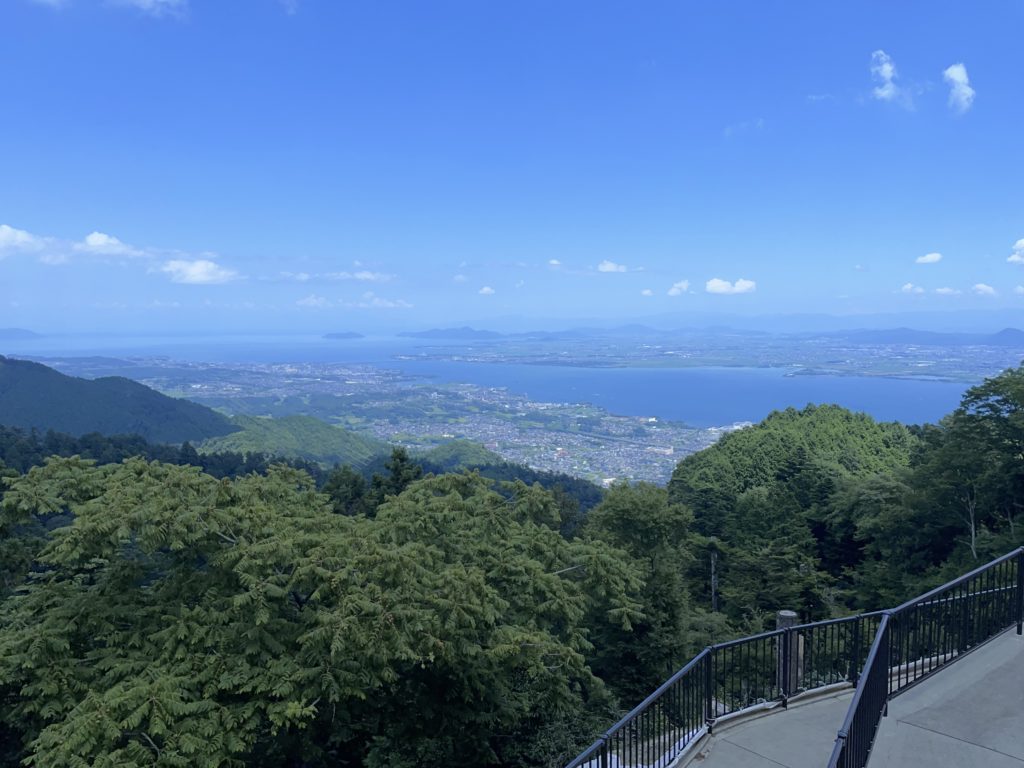
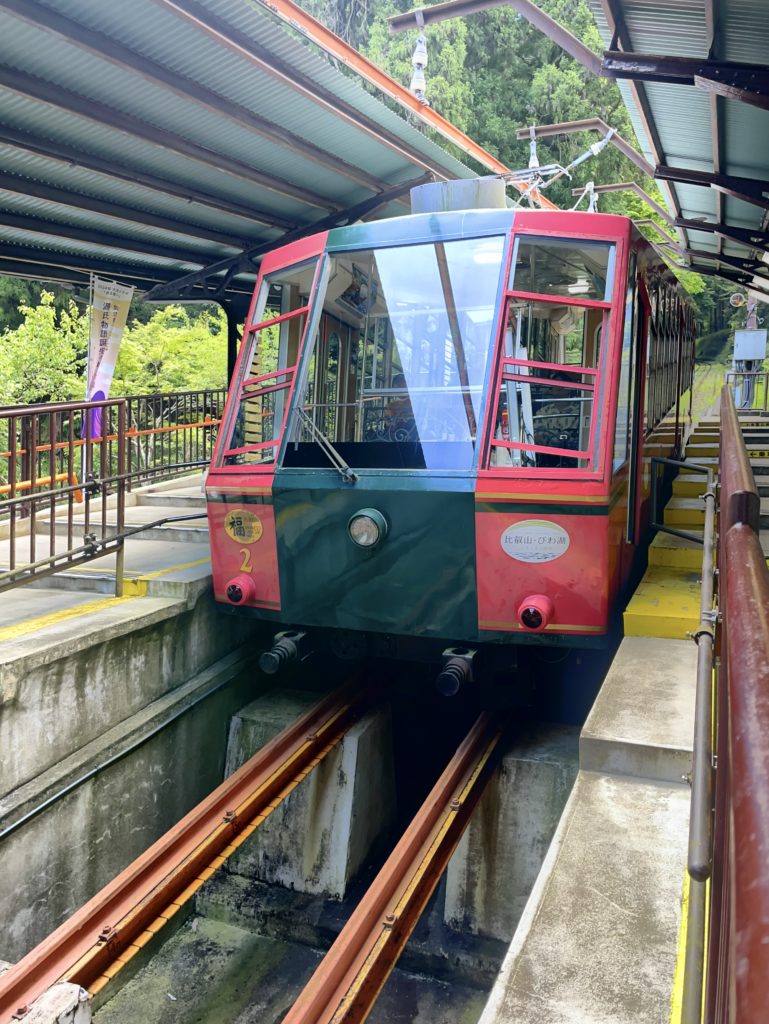
比叡山には京都側からもケーブルカーだか、ロープウェイだかが伸びているが、こちらの坂本口側からもケーブルカーで上がる事ができる。それがなければ急すぎる山だ。 なんでも、日本一長いケーブルカーだそうで、結構な高低差を一気に上がる。隣の席で外国籍の研究者らしき人と日本人?の同業者らしき人が話している。「このケーブルが切れたら大ジャンプできるね」 一番上まで上がると、琵琶湖を望む絶景が待っている。 Hieizan has a cable car or ropeway extending from the Kyoto side of the mountain, but it is also possible to take a cable car up from the Sakamoto-guchi side (Lake Biwa side) of the mountain. Without the cable car, the mountain would be too steep. The cable car is said to be the longest cable car in Japan, and it goes up a considerable height difference at a stretch. A foreign researcher and a Japanese colleague were sitting next to us. A foreign researcher and a Japanese colleague were talking in the seat next to us. “When this cable breaks, we will be able to make a big jump”. Once at the top, a spectacular view of Lake Biwa awaits.
比叡山延暦寺 Hieizan Enryakuji Temple
比叡山寺だったものに「延暦」の元号をもらって「延暦寺」になった。天台宗の総本山だが、浄土宗、浄土真宗など鎌倉以降の各宗派の祖師はここで学んでいる方が多い。 本堂にあたる?根本中堂は現在工事中で、あらゆる大企業が寄付をしている事からも、日本という国への影響力を感じる。工事を続けながらも、中に入って不断の灯火を拝むことができるし、工事の様子も見られる。お堂は丸ごと鉄骨で囲まれていて、外に一枚大きな建物が建っている状態。内部は簡易な床が敷かれ、階段が付けてあって、それを登って屋根の葺き替えやら、破風の付け替えやらを見られる。 その他、阿弥陀堂・東塔は信じられん角度📐の坂と階段の上にあり、ひーひー言ってお参りし、降りてきた国宝殿で有難い仏像を眺め、宮沢賢治の仏教帰依具合と、作品にみる仏教的表現を学び、バス停からバスに乗るというワンセット。山の上は涼しかったが、それにしたって暑いし、境内を歩くことそのものが修行なのだと理解した。この辺になってくると、最早何をお願いしてるのかも、分からなくなっていた。所謂無心というやつかもしれないし、単に暑さにやられただけともゆふ。次の機会があったら、一泊し山の上の諸々を周りたいところ。 The temple was formerly Hieizan-ji and received the era name “Enryaku” to become “Enryaku-ji. It is the head temple of the Tendai sect, but many of the founders of various sects since the Kamakura period, such as the JodoShu sect and the JodoShinShu sect, studied here. The KonponChudo Hall, which is the main hall of the temple, is currently under construction, and the fact that every major corporation has donated money to it shows the influence it has on the country of Japan. While construction continues, you can still enter the building to see the constant light and watch the construction work. The entire hall is surrounded by a steel frame, with one large building on the outside. Inside, a simple floor is laid and stairs are attached, and visitors can climb up to see the re-thatching of the roof and the replacement of gables. We visited the Amida Hall and the East Pagoda at an unbelievable angle (📐) and at the top of the hill and stairs, and then came down to the National Treasure Hall to see the Buddhist statues and learn about Kenji Miyazawa’s devotion to Buddhism and Buddhist expressions in his works. It was relatively cool on top of the mountain, but even so, it was hot, and I understood that walking through the temple grounds itself was a form of ascetic practice. I was not even sure what I was asking for. It might have been the so called “mindlessness,” or it might have been simply the heat. If I have another chance, I would like to stay overnight and explore the various places on the mountain.
比叡山、北白川、京都市内、京都駅 Hieizan, Kitashirakawa, Kyoto City, and the Station
比叡山から京都駅まではバスが出ている。京都にあるとは思ってなかった山の中のクネクネ道をバスで下り、京都ラーメンで名前だけ知っていた北白川に出る。そのまま下っていくと、銀閣寺道、四条河原町、鴨川沿いを下って駅前に至る。どこが、という訳ではないけれど、京都の街も変わりつつある。外国人向けの店は増えたし、外国人が経営する店も増えたろう。伝統との迫間で、どうバランスしていくのか。 There is a bus service from Hieizan to Kyoto Station. The bus goes down a winding road in the mountains, which I did not expect to find in Kyoto, and comes out at Kita-Shirakawa, which I only knew by name from Kyoto Ramen. The bus continues down the road to Ginkakuji Temple Road, Shijo Kawaramachi, and down along the Kamo River to the front of the station. Kyoto is changing, though not in any particular area. The number of stores catering to foreigners has increased, as have the number of stores run by foreigners. How will the balance be maintained between tradition and the new?
京都の駅は恐らく日本一混んでいる。日本人と外国人の観光客でごった返し、帰りの新幹線も混み混みで、のぞみの席も中々取れない。一時間後の電車をやっと確保して、晩御飯。京都駅は飲食のできる場所が結構散在しているから、一ヶ所で食べそびれても、歩いて移動していると反対側のレストラン街に出会したりする。私が東京駅を知らないだけかも知れない。 Kyoto station is probably the busiest in Japan. The Shinkansen train on the way home was also crowded, and it was difficult to get a seat on the Nozomi train. I finally managed to get a train an hour later and had dinner. Kyoto Station has many places to eat and drink scattered about, so even if you miss out on eating at one place, you can always find a restaurant on the other side of the station as you walk around.
京都では蕎麦かうどんを食べたい。しかも、野菜が使われているもの。九条ネギか京野菜。おばんざいなんがが置いてあれば、それだけで嬉しい。そういえば、大津で万願寺とうがらしを食べたが、加熱したものは美味かった。おばんざいでまとめたかったら、あんまり京都駅は良くないかも知らん。河原町辺りの和食系なお店がやはりよい。 In Kyoto, I want to eat soba or udon. Moreover, it should be made of vegetables. Kujo leeks or Kyoto vegetables. I would be happy if they have some obanzai, or a kind of vegetable dish. By the way, I ate Manganji peppers in Otsu, and the cooked ones were delicious. If you want to eat obanzai, Kyoto Station may not be a good place to do so. Japanese-style restaurants around Kawaramachi are better.
食事をしてもまだ時間あり、お茶でもしばこう。抹茶のお店のシェイクをたのむ。普通の白いバニラシェイクを、濃ゆいお抹茶ペーストで汚す感じな食べ方。気がつけば食べ物の事ばかり書いている。まぁそれが旅の楽しみだからね。 After eating, there is still time for a cup of tea. I ordered a shake from a matcha green tea store. It’s like eating a regular white vanilla shake with a thick matcha paste. I find myself writing about food all the time. Well, that’s the fun of traveling, isn’t it?
まとめ Closing thoughts
帰りの新幹線乗り換え車内など、書くべきかも知らんけど、基本帰路は書く事ないのが、私の旅行記。 20年前の奄美の記録と比べると、事実ベース、ただの記録に近い。特に感想はないのと、自分の動きに最早何の動機もなく、只々流れるままに行動している。 I don’t know if I should write about my return trip on the bullet train, but I basically have nothing to write about on the way home. Compared to the record of Amami 20 years ago, it is more like a factual base, a mere record. I don’t have any particular impressions, and I have no motive for my movements. Mindlessness a word I learned this time.
暑い夏、ご自愛ください。 Have a nice hot summer and take care.
Where would you go inside Japan? Kyoto is the first recommendation as everybody think. However, do you need the same experiences as somebody do? Okay, we’ll let you know the hidden history of Kyoto during our trip.